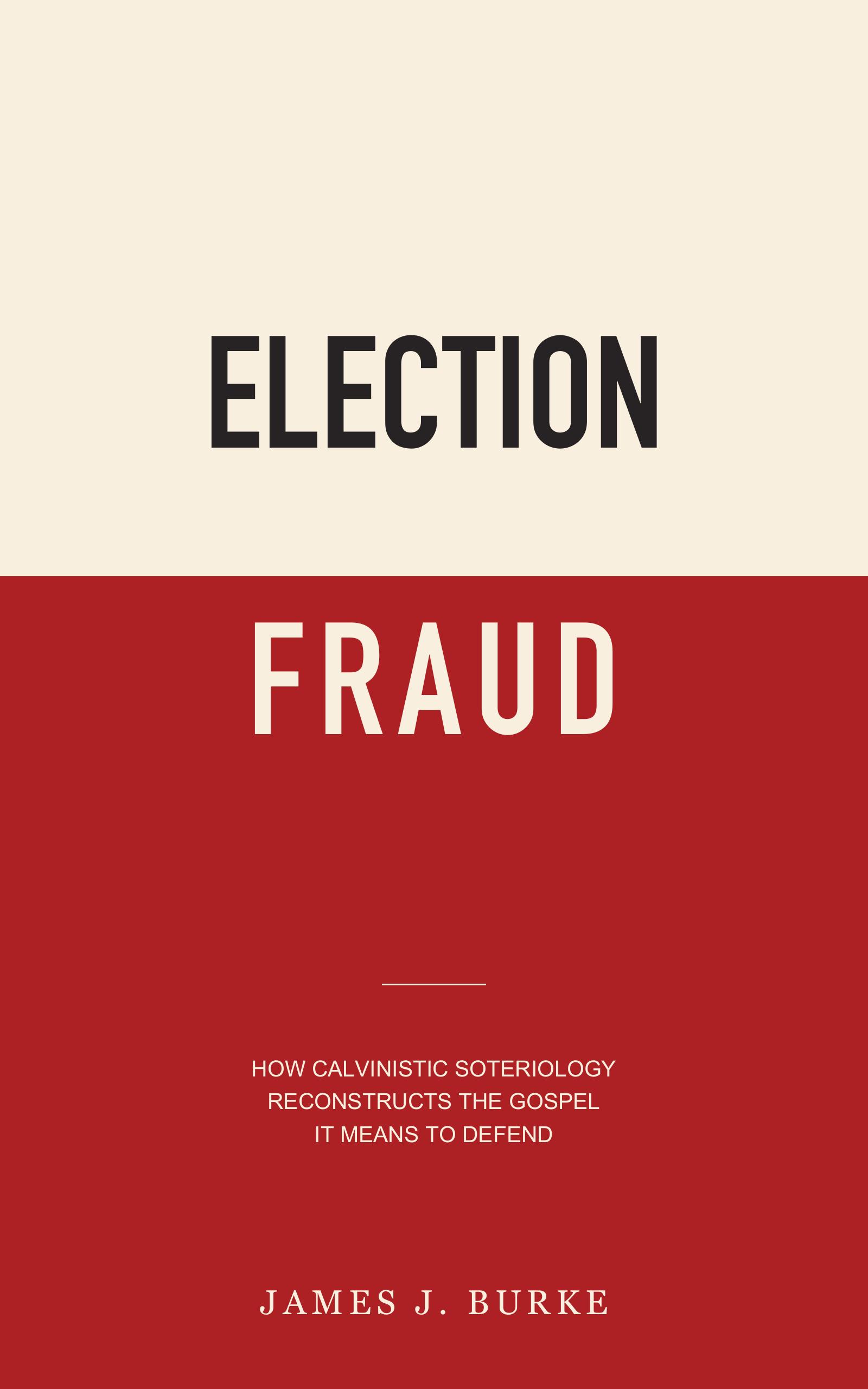
How Calvinistic Soteriology Reconstructs the Gospel It Means to Defend
There is much in Calvinistic preaching that every Christian ought to affirm. God is sovereign. Man is sinful. Salvation is entirely by grace. Christ is the only Saviour. No sinner can boast that he discovered God by superior wisdom, made himself worthy of mercy, or contributed anything to the finished work of Christ. If we are saved, God must receive all the glory.
Those truths are not the problem.
The problem is the theological construction erected around them. Calvinistic soteriology does not merely emphasize divine grace more strongly than other Christians do. It defines grace, inability, election, atonement, calling, regeneration, and faith in a particular way and then arranges them in a particular order. In that construction, God chose certain individuals for salvation before the foundation of the world and passed over the rest. Christ died with the specific intention of securing salvation for those chosen individuals. At the appointed time, God effectually calls and regenerates each of them. That regeneration renews the will and inevitably produces repentance and faith. Everyone given this grace will come, and no one from whom it is withheld can come.
Calvinists sincerely preach Christ. They call people to faith. They do not ordinarily tell sinners to wait passively for regeneration, and they do not imagine that God literally repents or believes in anyone's place. Their confessions insist that the regenerated sinner comes to Christ willingly.
The objection, therefore, is not that Calvinists deny faith. The objection is that their system has already determined what faith can be. If regeneration must occur before faith and infallibly produce it, faith is not the sinner's genuinely resistible surrender to Christ. It is the inevitable evidence that God previously selected and inwardly remade him. The public call of the gospel may be addressed to everyone, but only those given an irresistible inward call can answer it. The rest are commanded to do what the system says they are constitutionally unable to do, without a grace God ever intended to give them.
That changes more than the order of two events. It changes the meaning of the gospel's call, the nature of faith, the purpose of the atonement, the basis of condemnation, the identity of the elect, and the character of the God proclaimed.
The title Election Fraud is deliberately pointed. It is not an accusation that Calvinists are personally dishonest. It names what I believe the system does to the biblical doctrine of election. Scripture locates God's saving purpose in His Son and identifies the elect as the people joined to the Chosen One. Calvinism relocates the decisive saving choice to a hidden selection of individuals behind the gospel. It then reads that decree back into nearly every passage about God's purpose, foreknowledge, calling, and grace.
I do not object because Calvinism makes God too sovereign. I object because it mistakes determinism for sovereignty, inevitability for grace, and individual selection for election in Christ. In trying to protect salvation from human boasting, it reconstructs the saving encounter so thoroughly that the gospel's plain summons no longer means what it appears to mean.
The biblical account is both more gracious and more direct:
The Father draws. The Word reveals Christ. The Spirit convicts and enlightens. The sinner genuinely entrusts himself to Christ. In that converting faith, the Spirit joins him to the risen Son and gives him life.
God comes first, grace makes every response possible, Christ accomplishes everything necessary for salvation, and yet the person called by God really answers Him. The sinner believes; the Spirit gives life.
We Must Begin with What Grace Means
Grace does not begin when a sinner decides to believe. Long before he responds, God has acted.
God created a world that reveals His power and Godhead. He gave His Word. He sent His Son. Christ died for sinners and rose again. The gospel is carried to people who did not invent it and could not discover its saving message by unaided reason. The Father draws. The Spirit exposes sin, presses the truth upon the conscience, enlightens the mind, and confronts the will with Jesus Christ. No one comes to the Son unless the Father draws him (John 6:44). No one can confess Jesus as Lord apart from the work of the Holy Ghost (1 Corinthians 12:3). Faith comes by hearing, and hearing by the Word of God (Romans 10:17).
No sinner can take credit for any of this. He did not provide the light, send the messenger, devise the cross, raise Christ from the dead, or create the life he will receive. He does not climb out of darkness and find God waiting at the top. God enters the darkness with light.
But divine initiative is not divine substitution.
The Father draws; He does not believe for the sinner. The Spirit convicts; He does not repent in the sinner's place. The Word reveals Christ; it does not eliminate the need for an answer to Christ. Grace comes first, surrounds the encounter, and supplies everything the sinner lacks, but grace does not make the sinner irrelevant to his own surrender.
This is where Calvinistic arguments frequently present a false choice. Either God sovereignly and irresistibly produces faith, we are told, or man autonomously generates faith and contributes it to salvation. But those are not the only possibilities. A creature may give a real, enabled, dependent answer to his Creator. A will confronted and illuminated by grace need not be either autonomous or mechanically determined. God is capable of bringing truth to bear upon a person without becoming the person or rendering his response inevitable.
Grace is not weakened because it can be resisted. Stephen told men who had received God's revelation, “Ye do always resist the Holy Ghost” (Acts 7:51). Jesus lamented over Jerusalem, “how often would I have gathered thy children together ... and ye would not!” (Matthew 23:37). Wisdom calls while fools refuse her. Light comes into the world while men love darkness rather than light. The tragedy in each case depends upon the reality of both sides: God truly addressed them, and they truly refused Him.
Sovereignty does not mean that everything God commands must be irresistibly performed. It means that God possesses the right, authority, wisdom, and power to accomplish His purpose. The sovereign God may create responsible persons, address their wills, permit resistance, judge refusal, and still bring His purpose in Christ to completion. A king does not cease to be sovereign because his subjects can rebel. Their rebellion proves their guilt, not his impotence.
Spiritual Death Does Not Mean the Absence of a Will
Calvinism begins its case with total depravity or total inability. Fallen man is dead in trespasses and sins (Ephesians 2:1). The natural man does not receive the things of the Spirit of God (1 Corinthians 2:14). The carnal mind is enmity against God and cannot submit to His law (Romans 8:7–8). No one seeks God as though sin had left the human will morally neutral.
I affirm the ruin those passages describe. Sin is not a superficial injury. Man is alienated from God's life, enslaved to sin, darkened in understanding, corrupt in desire, and incapable of rescuing himself. No one reasons his way into regeneration, reforms himself into acceptance, or originates saving faith apart from revelation and grace.
But Calvinism adds an inference to the biblical description. It treats spiritual death as though it means that God cannot address the sinner responsively until He first makes him alive. The familiar analogy is a corpse: a dead man cannot see, hear, believe, or reach out his hand. Therefore, the sinner must be regenerated before he can believe.
The analogy proves too much. The spiritually dead walk according to the course of this world, fulfill desires, disobey, resist, reason, love darkness, and respond to all manner of spiritual influences. They are not nonexistent persons or mindless bodies. Their death is separation from the life of God under the dominion and condemnation of sin. It describes their relation to God and the kind of life they possess; it does not erase their faculties or place them beyond the reach of God's speaking.
When Christ called physically dead Lazarus, His word reached where no human word could reach. In the same way, the living Word can penetrate the heart of a spiritually dead sinner. But the conclusion is not that Lazarus secretly came alive so that he could hear Christ make him alive. The power was in the call of Christ. God's ability to address the dead is an argument for the sufficiency of His Word, not for a hidden regeneration before the gospel can be heard with faith.
The distinction is essential:
- The sinner has no independent ability to originate saving knowledge or restore himself to God.
- God has every ability to reveal, convict, enlighten, draw, and enable a genuine response without first regenerating him.
Inability is therefore neither an excuse nor a virtue. It is the moral bondage of a person who cannot save himself and will not come to the light on his own. Grace must intervene. Yet preparatory grace need not be regenerative grace. God can awaken attention without imparting eternal life, expose rebellion without creating a new man, and make the truth understood without irresistibly determining surrender.
The parable of the sower makes little sense if every spiritually significant response requires regeneration. Some hear nothing more than an exposed word, quickly stolen away. Some receive the Word with joy and “for a while believe,” but have no root (Luke 8:13). Others receive the Word among competing loves that choke its fruit. The responses are not all saving, but neither are they imaginary. The Word genuinely acts upon hearers in different ways. Light, conviction, intellectual belief, emotional reception, and temporary response may all precede conversion without being conversion.
Calvinism compresses this varied preparatory work into a binary: either the outward call leaves the unregenerate sinner unchanged, or the inward effectual call regenerates him and certainly produces faith. Scripture presents a richer and more tragic field. God works upon people who may resist, delay, tremble, inquire, rejoice temporarily, turn back, or finally entrust themselves to Christ. We should not rename every real work of the Spirit regeneration merely because it precedes faith.
The Gospel Is an Actual Call
The gospel is news, but it is never merely information. It announces what God has done in Jesus Christ and summons the hearer to Him.
Jesus preached, “Repent ye, and believe the gospel” (Mark 1:15). He invited the thirsty to come and drink. Paul declared that God “now commandeth all men every where to repent” (Acts 17:30). The apostles pleaded, reasoned, warned, and persuaded. John says that those who receive Christ and believe on His name are given the right to become the sons of God (John 1:12). The New Testament does not address sinners as spectators waiting to discover whether an inward transaction has already made their answer inevitable. It addresses them as people to whom God is genuinely speaking.
Calvinists distinguish the general call from the effectual call. The general call goes to everyone who hears the gospel, but only the elect receive the inward call that certainly brings them to faith. This distinction allows the preacher to invite all while preserving a grace intended to save only some.
But it creates the very difficulty it is meant to solve. What makes the general call a genuine offer to a hearer whom God has not chosen, for whom Christ did not intend to secure salvation, and to whom God has determined not to give the only grace by which he could accept? The words may be spoken universally, but the saving possibility contained in them is not universal. The nonelect are told to come while the system insists they cannot come and God has eternally chosen not to give them what would make coming possible.
It is not enough to answer that they refuse willingly. Of course they do. The question is why their refusal is inevitable. Under Calvinism, the decisive explanation cannot finally be their encounter with the light, because no encounter could have ended otherwise without selective regeneration. The decisive difference lies in God's hidden choice to regenerate one hearer and pass over another.
The biblical call is more straightforward. Christ has been given for the world. The gospel truthfully declares Him available to sinners. The Spirit genuinely brings that truth to bear upon the hearer. The hearer may resist the grace he receives or surrender to the Saviour revealed in it. When he refuses, his condemnation rests upon a real rejection of light. When he believes, his salvation rests entirely upon Christ.
A command does not turn obedience into merit. A hand receiving a gift does not purchase it. A drowning man who ceases fighting his rescuer has not contributed to the strength that carries him to shore. Faith is not a work added to Christ's work; it is the abandonment of every competing ground of confidence and every claim to self-rule.
Faith is not the sinner's contribution to salvation. It is the sinner's surrender to the Saviour.
Faith and Repentance Are the Human Side of Conversion
Faith is sometimes reduced to accepting a set of propositions, repeating a prayer, or recalling a decision. Calvinism rightly objects that mere intellectual assent cannot save. But its solution is to make genuine faith the inevitable product of prior regeneration.
The better solution is to recover the biblical nature of faith.
Saving faith is entrusting oneself to Jesus Christ. It includes belief in the gospel because no one can trust a Christ he does not know. It includes repentance because one cannot entrust oneself to Christ as Lord while reserving the right to remain one's own lord. Faith and repentance are not two payments collected at the door of salvation. They are two descriptions of one turn: away from self-rule, sin, idols, and every false ground of life, and toward the crucified and risen Son.
The person who believes does something real, but he creates nothing. He does not produce the life, earn the verdict, supply righteousness, satisfy wrath, remove guilt, or join himself to Christ by spiritual power. He yields to the One revealed by grace.
This is why faith excludes boasting rather than providing a subtler occasion for it. Paul contrasts faith with works precisely because faith does not bring a claim (Romans 4:4–5). The worker presents a debt; the believer receives a promise. The content of faith is “not I, but Christ.” To boast that one believed would contradict the very faith of which he boasted.
Calvinists often argue that if one sinner believes and another refuses, the believer has made himself to differ and may therefore boast. But difference does not automatically mean merit. A pardoned prisoner cannot boast that he wrote the pardon merely because another prisoner tore his up. The glory belongs to the king who offered mercy, bore its cost, and made release possible. The refusal explains why one remains condemned; reception does not explain the greatness or cost of the gift.
Moreover, Scripture itself repeatedly locates the difference at the response to God's light. Some receive Christ; others reject Him. Some judge themselves unworthy of everlasting life; others believe. Some refuse to come to Christ that they might have life. We should not be more anxious than Scripture is that such language will rob God of glory.
Regeneration Is Life in Union with Christ
The debate over whether faith precedes regeneration is often treated like a contest between adjacent links in an order of salvation. That framing is already too mechanical.
Regeneration is not an isolated package of life deposited into an individual so that he can subsequently come to Christ. Life is in the Son. “He that hath the Son hath life; and he that hath not the Son of God hath not life” (1 John 5:12). The Spirit gives life by joining the sinner to the risen Christ. New birth, union with Christ, entrance into the new humanity, justification, reconciliation, and the gift of the Spirit are distinguishable realities, but they belong to one converting encounter.
Colossians describes believers as buried with Christ and risen with Him “through the faith of the operation of God” (Colossians 2:12). John says that those who receive Christ are given the right to become God's children, and then identifies their birth as the work of God rather than blood, flesh, or human will (John 1:12–13). The human reception does not generate divine birth, but neither is divine birth presented as a hidden act that makes reception inevitable.
It may help to think of conception rather than a chain of detached transactions. The actions are distinct without becoming independent episodes. The sinner entrusts himself to Christ; the Spirit joins him to Christ and gives him life. Faith does not cause regeneration, as though belief possessed creative power. Regeneration does not cause faith, as though God must first reconstruct the person and thereby determine his answer. In conversion, the sinner believes and the Spirit gives life.
Faith does not regenerate, and the Spirit does not believe. In conversion, the sinner entrusts himself to Christ, and the Spirit makes him alive in Christ.
This is not a half-divine, half-human salvation. The two actions do not contribute equal shares to one result. Christ alone accomplished redemption. The Spirit alone imparts life. Faith adds no righteousness, merit, power, or payment. It is simply the real surrender of the person whom grace has brought face to face with Christ.
Election Is God's Purpose in the Chosen One
Calvinism makes unconditional individual election the controlling explanation of salvation. Before creation, God selected particular individuals to receive saving mercy, not because of anything in them and not because He foresaw their faith. Christ came to redeem those people, and the Spirit effectually applies that redemption to every one of them.
Scripture certainly teaches election. The question is not whether God chooses, but what He chooses, whom He identifies as chosen, and where He locates that choice.
Paul begins his great discussion of election in Ephesians with a repeated phrase: in Christ. God has blessed us with all spiritual blessings in Christ and chosen us in Him before the foundation of the world (Ephesians 1:3–4). Christ is not merely the instrument used to carry out a list of selections made elsewhere. He is the sphere, ground, identity, and center of God's eternal saving purpose.
Christ is God's Chosen One: the faithful Son, true Image, promised Seed, Last Adam, and Head of a new humanity. God determined before the foundation of the world what would be true of the people in His Son. They would be holy and without blame, adopted into His family, accepted in the Beloved, redeemed, given an inheritance, conformed to Christ's image, and gathered under His headship. Everyone joined to Christ shares His chosen standing and appointed destiny.
Election therefore describes the identity, vocation, and future of a people in Christ. It does not require an unseen list of individuals chosen to be placed into Christ without reference to their response to the gospel. Believers are elect because they are in the Elect One, just as they are righteous because they are in the Righteous One and sons because they are in the Son.
This is not the same as saying God looked down the corridors of time, discovered which autonomous individuals would believe, and elected them because of their foreseen virtue. Faith is not a virtue that obligates God, and God's purpose is not a reaction to information He learned about us. God eternally chose Christ and determined the destiny of the new humanity in Him. The gospel now summons sinners into that purpose through union with the Son.
Foreknowledge does not require Calvinistic selection either. In Scripture, to know persons often means to recognize them in relationship and purpose. God foreknew His people, Israel, without individually regenerating every Israelite (Romans 11:2). Christ was foreknown before the foundation of the world as the Lamb appointed in God's purpose (1 Peter 1:20). Those whom God foreknew He predestined to be conformed to the image of His Son (Romans 8:29). The emphasis is not upon God previewing decisions or secretly selecting isolated individuals; it is upon the people already in view within His redemptive purpose and the destiny appointed for them in Christ.
Predestination in the New Testament concerns that appointed destiny. God predestines those in Christ to adoption, inheritance, and conformity to His Son. The word does not itself say that God predestined which unbelievers would believe. Calvinism imports its individual selection into the term and then uses the term to prove the selection it imported.
Election is therefore larger than a mechanism for deciding who goes to heaven. It is God's purpose to create a holy people in His Son, display His grace through them, and bring the entire inheritance of the new creation under Christ. It magnifies Christ rather than directing us behind Him to a secret decree.
The Cross Is Genuinely for the World
Once unconditional individual election controls the system, the atonement must be fitted to it. Some Calvinists affirm limited or definite atonement: Christ died with the saving intention of redeeming the elect alone. Others speak of a death sufficient for all but efficient only for the elect. Either way, the system's saving provision is designed around the preselected people to whom it will be irresistibly applied.
Scripture speaks more expansively. God loved the world and gave His Son (John 3:16). Christ is the propitiation not for our sins only, “but also for the sins of the whole world” (1 John 2:2). He tasted death for every man (Hebrews 2:9). He gave Himself a ransom for all (1 Timothy 2:6). God was in Christ reconciling the world unto Himself and has committed to us the word of reconciliation (2 Corinthians 5:19).
These passages do not teach universal salvation. The provision accomplished in Christ must be received in Christ. Propitiation is sufficient because Christ's sacrifice fully satisfies God's wrath against sin. Reconciliation removes every divine barrier and grounds the genuine announcement of peace. But no one possesses life apart from union with the Son.
The distinction between provision and participation preserves both the universal language of the cross and the particular experience of salvation. Christ did not merely make salvation hypothetically possible while leaving sinners to complete it. He accomplished everything salvation requires. Yet what He accomplished is enjoyed only in Him. The gospel therefore does not ask whether Christ may perhaps have died for the hearer. It announces a Saviour given for the world and calls the hearer to be reconciled to God.
Calvinism sometimes argues that if Christ paid for every person's sins, God would be unjust to condemn anyone for sins already punished. But atonement is not a commercial transfer in which a quantified sack of punishment is moved from particular accounts to Christ's account. Christ offered Himself as the sufficient and final sacrifice for sin. The benefits of that sacrifice are located in Him. The unbeliever is condemned not because Christ's sacrifice was deficient, but because he refuses the Son in whom forgiveness and life are given.
A universal provision makes the universal call truthful. We may look any sinner in the eye and say, without a hidden qualification, “Christ gave Himself for sinners. God commands you to repent. The way is open. Come to Christ and live.”
Unconditional Election Produces an Unavoidable Doctrine of Reprobation
Calvinists differ over how to describe reprobation. Some speak of a symmetrical double predestination: God actively determines both salvation and condemnation. Others say God actively elects some but merely passes over the rest, leaving them in the sin they freely love.
The distinction matters within Calvinistic theology, but it does not remove the central difficulty. If every fallen person is absolutely unable to believe unless God first regenerates him, and if God has unconditionally determined to regenerate only selected individuals, then God has determined not to give the rest the only grace by which they could answer His command. Their unbelief is voluntary, but it is also inevitable within the decree.
This raises more than an emotional objection. It raises questions about the revealed character of God and the moral intelligibility of the gospel.
God commands all men everywhere to repent. He takes no pleasure in the death of the wicked but calls the wicked to turn and live. Christ weeps over the unwilling. God is longsuffering, “not willing that any should perish, but that all should come to repentance” (2 Peter 3:9). Paul says God “will have all men to be saved, and to come unto the knowledge of the truth” (1 Timothy 2:4).
Calvinism must place another will behind these revealed desires: God commands and in some sense desires the salvation of all, while decretively willing to withhold saving grace from most. The revealed call says, “Come”; the secret decree ensures that many cannot. God's lament over refusal then conceals the fact that He chose not to provide the sole effective remedy for that refusal.
Appealing to mystery cannot reconcile direct contradictions created by the system. There are mysteries in God's wisdom that creatures cannot penetrate. But “God genuinely calls this person to do what He has unconditionally determined not to enable him to do” is not merely a depth beyond our sight. It is a theological claim about the relationship between God's revealed word and His hidden intention.
Scripture places the responsibility for condemnation elsewhere. “Light is come into the world, and men loved darkness rather than light” (John 3:19). Jesus tells His hearers, “ye will not come to me, that ye might have life” (John 5:40). Condemnation is not the outworking of an omitted election. It is the judgment of real rebellion against real light, real grace, and a genuinely available Saviour.
God's patience is sincere because repentance is genuinely open. His grief is sincere because refusal was not irresistibly scripted. His judgment is just because the condemned have not merely failed to possess a grace never intended for them; they have resisted the God who truly drew and addressed them.
The Principal Proof Texts Do Not Require the Calvinistic System
No complete objection can simply assemble universal invitations while ignoring the passages Calvinists believe establish unconditional election and effectual grace. These texts deserve careful exegesis, and each will require fuller treatment elsewhere. But none requires the system built upon it.
John 6:37, 44, and 65
Jesus says that all the Father gives Him will come, that no one can come unless the Father draws him, and that no one can come unless it is given by the Father. Calvinism reads the giving as an eternal selection of individuals and the drawing as irresistible regeneration.
The chapter does not say either. Jesus is confronting people who possess the Scriptures, witnessed His signs, ate His bread, and still refuse the One to whom the Father had been directing Israel. The next verse explains the drawing through instruction: “Every man therefore that hath heard, and hath learned of the Father, cometh unto me” (John 6:45). The Father gives to the Son those who truly receive His witness. The emphasis is upon the Father's revelation leading people to Christ, not a regeneration concealed before faith.
John later records Jesus saying, “And I, if I be lifted up from the earth, will draw all men unto me” (John 12:32). Drawing cannot itself mean irresistible conversion unless all men are irresistibly saved. God draws through revelation centered in the crucified Son; people may nevertheless refuse the light.
Acts 13:48
Luke says, “as many as were ordained to eternal life believed.” This is often treated as a direct statement that God had eternally selected particular individuals and therefore caused their faith.
The text does not identify when the ordering occurred, describe an eternal decree, or say regeneration produced belief. The surrounding contrast is between Jews who thrust the Word from themselves and judge themselves unworthy of everlasting life, and Gentiles who receive the apostolic message with gladness. The word may describe those disposed or ordered toward eternal life in the unfolding response to the gospel. At minimum, the verse cannot bear the entire Calvinistic structure placed upon it without importing that structure from elsewhere.
Romans 8:29–30
Those whom God foreknew He predestined, called, justified, and glorified. The passage gives suffering believers assurance that God's purpose will bring His people to conformity with Christ. It does not pause to explain how unbelievers are selected for initial entrance into Christ. The people foreknown are viewed corporately within God's redemptive purpose, and their predestination concerns the goal: conformity to the image of the Son.
The passage is a golden chain of God's faithfulness to His people, not necessarily a chronological chain of experiences by which selected unbelievers are made believers.
Romans 9
Romans 9 is not an abstract essay on why God saves one individual and damns another. Paul is anguished over Israel's place in the purpose of God. The examples concern the historical line through which the promise comes and the roles of peoples and rulers within that purpose. Isaac rather than Ishmael, Jacob rather than Esau, and Pharaoh all demonstrate God's freedom to advance His covenant purpose despite human claim, custom, or resistance.
The chapter certainly teaches divine freedom and judgment. It does not say that Jacob was individually chosen for heaven while Esau was created for hell, nor that Pharaoh was denied every genuine opportunity to respond. Paul proceeds to explain Israel's stumbling in terms of pursuing righteousness by works, not submitting to God's righteousness, and refusing the proclaimed Word. Romans 10 then declares that whosoever calls upon the Lord shall be saved. Romans 11 warns Gentile believers not to presume, describes unbelieving branches as broken off because of unbelief, and declares that they may be grafted in again if they do not continue in unbelief.
The surrounding argument resists the fatalistic reading often imposed upon chapter 9.
Romans 9 receives a fuller, passage-by-passage treatment in Fortress of Justification.
Ephesians 1:3–11
Ephesians does teach election before the foundation of the world, but its grammar repeatedly locates every blessing in Christ. Paul writes to believers as members of the chosen people and describes the destiny God appointed for that people in His Son. Nothing in the passage requires the conclusion that God chose which particular unbelievers He would irresistibly cause to believe.
The plural language matters: God chose us in Him. The emphasis is upon the corporate identity and inheritance of Christ's people, not an invitation to search behind Christ for evidence that one's individual name appeared on a secret list.
Ephesians 2:1–10
Paul says believers were dead in sins and that God made us alive together with Christ. Calvinism inserts an interval: God first made selected individuals alive so that they could then believe.
Paul's emphasis is union—made alive together with Christ, raised together, and seated together in Him. He is contrasting the old corporate existence in Adam and the world with the new creation in Christ. The passage never says, “You were made alive in order that you might believe.” It says salvation is by grace through faith and that the entire saving reality is God's gift, excluding works and boasting.
Philippians 1:29 and 2 Timothy 2:25
Belief is granted, and repentance is given. Certainly. No one could believe a gospel God had not revealed or repent without truth, conviction, opportunity, and grace. A gift need not be irresistibly exercised to be genuinely given. God grants the privilege, light, and capacity to respond; the language does not by itself establish regeneration before faith.
First John 5:1
“Whosoever believeth that Jesus is the Christ is born of God” is sometimes made into a grammatical proof that new birth causes belief because “is born” is perfect tense while “believeth” is present. But John uses the same construction to identify the marks of those born of God: everyone who practices righteousness is born of Him (1 John 2:29), and everyone who loves is born of God (1 John 4:7). The grammar does not mean regeneration temporally causes every act of righteousness or love in the same way Calvinists claim it causes first faith. John is identifying the believing person as one who possesses God's life, not mapping the temporal sequence of conversion.
These passages affirm God's initiative, purpose, and preserving grace. They do not require unconditional individual election, limited atonement, irresistible calling, or regeneration before faith.
Assurance Does Not Require a Hidden Decree
Calvinism often appears to offer the strongest possible assurance. If God unconditionally selected the believer, Christ died particularly for him, irresistible grace brought him to faith, and the decree guarantees his perseverance, what could be more secure?
But the system moves the ultimate ground of personal assurance behind the gospel. Christ is sufficient, but how does a person know Christ was intended for him? The general call cannot prove it, because that call also goes to the nonelect. A past profession cannot prove it, because temporary faith may be false. Present fruit becomes evidence of effectual calling, but now the anxious believer must inspect himself for signs that his faith was the product of regeneration rather than an unregenerate imitation.
Scriptural assurance looks outward before it looks inward. Christ is the Saviour given for the world. His promise is true for every person who comes. The believer need not discover a secret election behind Christ; he knows that he has entrusted himself to Christ and that Christ receives all who come to Him.
Once joined to the Son, the believer's security does not depend upon maintaining the intensity of his original decision. Eternal life is not a probationary possession. Christ gives His sheep eternal life, and they shall never perish (John 10:28). The Father keeps, the Son intercedes, and the Spirit seals. The new creation is not reversed every time faith trembles.
Fruit matters, not as forensic evidence that one may have been secretly selected, but because rooted life grows. The Spirit's presence, the believer's continuing relation to Christ, correction, conviction, and developing fruit provide experiential confirmation of the life promised in the gospel. Assurance rests first in the objective Christ and His promise, and then recognizes the living effects of union with Him.
This is not weaker assurance. It is assurance permitted to remain where the apostles place it: in the Son. “He that hath the Son hath life.”
This Is Not Pelagianism, Semi-Pelagianism, or Classical Arminianism
Labels often substitute for listening. If faith is not irresistibly produced by prior regeneration, the position is quickly called Pelagian, semi-Pelagian, synergistic, or merely Arminian.
Pelagianism denies the depth of human ruin and makes obedience possible by natural human capacity. That is not the position argued here. The sinner does not possess an untouched island of righteousness from which he initiates salvation. He depends upon revelation, the gospel, the drawing Father, the convicting and enlightening Spirit, and the finished work of Christ. Grace precedes and enables every saving response.
Nor is salvation a cooperative construction in which God supplies most of the work and man completes the remainder. Christ completes the work. The Spirit gives the life. Faith supplies none of either. Receiving is necessary without becoming causative or meritorious.
The position also differs from the simplest account of Arminian election based upon foreseen individual faith. God's election is not His ratification of choices He observes in advance. His purpose originates wholly in Himself and is established in Christ before the foundation of the world. Individuals enter and share that elect purpose through converting union with Christ.
If a label must be supplied, Christocentric election through grace-enabled faith comes closer. But the biblical relationships matter more than the label.
What Is Finally at Stake
The dispute is sometimes portrayed as an intramural argument about the order of salvation. Calvinists and non-Calvinists both preach faith in Christ, we are told, so perhaps the difference should be left to specialists.
Christians should speak charitably. Calvinists are our brothers and sisters when they have entrusted themselves to the biblical Christ. Many preach the gospel with greater clarity and urgency than their system can consistently explain. We need not question their sincerity or deny the grace evident in their lives.
But the theological difference is not small.
If unconditional individual election is true, the decisive reason one sinner is saved and another lost is God's choice to regenerate one and not the other. If limited atonement is true, the cross was not given with a saving intention toward every hearer. If total inability requires prior regeneration, the general call commands most hearers to do what no grace available to them permits. If effectual calling is irresistible, faith is the certain result of a prior selective act rather than a genuinely resistible surrender. If reprobation follows, condemnation ultimately unfolds within a decree that withheld the only possible remedy.
Each doctrine reinforces the others. That is why adjusting one term cannot solve the problem. Calvinism is a coherent system, but its coherence is purchased by allowing the hidden decree to control the meaning of the revealed gospel.
Scripture begins with Christ in the open.
God loved the world and gave His Son. Christ offered a sufficient sacrifice for sin and rose as the source of a new humanity. The gospel truthfully announces Him to every creature. The Father draws through the witness He has given. The Spirit convicts, enlightens, and brings the truth to bear upon the will. Sinners may resist that grace and remain justly condemned, or they may abandon self-rule and entrust themselves to Christ. In that converting faith, the Spirit joins the believer to the Son, gives him life, declares him righteous in Christ, reconciles him to God, and brings him into the elect people whose destiny God appointed before the world began.
From beginning to end, salvation is of the Lord.
The sinner does not conceive the plan, provide the sacrifice, initiate the call, manufacture the faith, create the life, pronounce the verdict, or preserve the union. He receives the Christ whom grace has revealed. Even his receiving is possible only because God has come near and addressed him.
Yet it is truly the sinner who receives. God does not need to replace the human will in order to save the human person. He frees no one by making surrender inevitable and condemns no one for failing to receive a grace never intended for him. He speaks truthfully, draws graciously, permits real resistance, receives every person who comes, and keeps everyone joined to His Son.
God takes the first step, Christ accomplishes the whole work, the Spirit brings the gospel to bear, the sinner genuinely surrenders, and God alone gives life.
That account leaves no room for boasting. It also leaves no hidden restriction behind the words of Christ.
“Him that cometh to me I will in no wise cast out” (John 6:37).
The invitation means what it says.
Sources and Passages for Further Study
- Westminster Confession of Faith, chapters 3, 8, 9, 10, and 17.
- Canons of Dort, First Head of Doctrine; Second Head of Doctrine; Third and Fourth Heads of Doctrine, especially Articles 10–14.
- Genesis 3:1–24; Ezekiel 18:23–32; Matthew 23:37; Mark 1:14–15; Luke 8:4–15.
- John 1:9–13; 3:14–21; 5:24, 39–40; 6:35–65; 10:27–29; 12:32, 44–50.
- Acts 7:51; 13:38–48; 17:22–31; Romans 3–5; 8:28–39; 9–11.
- 1 Corinthians 2:6–16; 2 Corinthians 5:14–21; Ephesians 1:3–14; 2:1–10.
- Philippians 1:27–30; Colossians 2:9–14; 1 Timothy 2:1–6; 2 Timothy 2:24–26.
- Hebrews 2:9–18; 1 Peter 1:18–25; 1 John 2:1–2, 29; 4:7–10; 5:1–13; 2 Peter 3:9.